
If you’ve never visited a dental hygienist before or it’s been a while since your last appointment, it’s completely normal to feel unsure about what’s involved. You might be wondering whether it will be uncomfortable, how long it takes, or whether it’s really worth fitting into a busy schedule.
The short answer: yes, it absolutely is. A professional hygiene appointment is one of the most effective things you can do for your long-term oral health. According to the NHS, gum disease affects most adults in the UK to some degree, and it remains the leading cause of tooth loss in adults. The good news is that it’s largely preventable and your hygienist is your greatest ally in keeping it at bay.
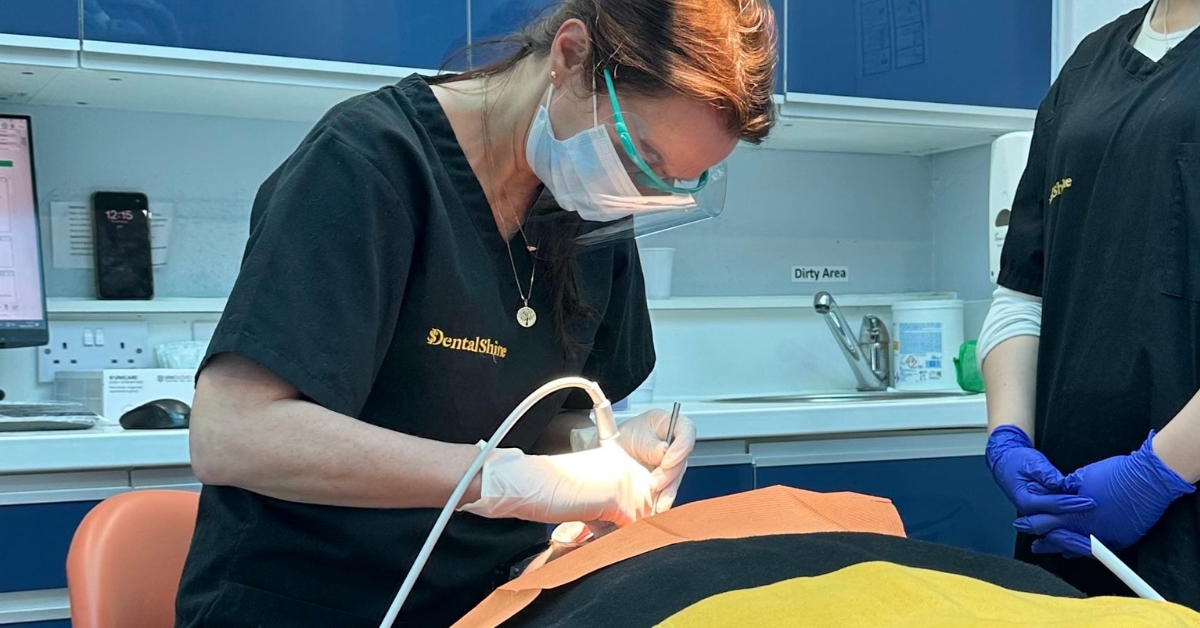
At DentalShine in Islington, our experienced hygienist Beata takes a thorough, patient-centred approach to every appointment. Here’s a step-by-step guide to what you can expect when you visit us for the first time.
Before You Arrive
There’s no complicated preparation needed, but a few simple steps can help you get the most out of your visit:
- Brush your teeth beforehand. This isn’t about impressing anyone — it simply gives the hygienist a cleaner starting point so they can focus on the areas that need professional attention.
- Bring a list of any medications you take. Certain medications can affect your gum health or how your mouth responds to treatment, so this helps us tailor your care.
- Make a note of any concerns. Bleeding gums, sensitivity, or areas that feel tricky to clean at home — your hygienist wants to hear about all of it.
- Avoid strong-smelling food or drink in the hour before. Not essential, but you’ll feel more at ease during a close-up appointment.
Step 1: A Friendly Conversation
Your appointment begins with a chat, not a clinical procedure. Our Dental Hygienist Beata will ask about your medical history, your daily brushing and flossing habits, your diet, and any specific symptoms you’ve noticed. This conversation matters more than you might think, it gives the hygienist a complete picture of your oral health so they can personalise every aspect of your session.
There’s no judgement here. Whether you floss every day or haven’t picked up an interdental brush in months, honest answers help the hygienist recommend the right tools and techniques for your life.
Step 2: A Thorough Assessment of Your Teeth and Gums
Before any cleaning begins, the hygienist will carry out a detailed examination. This typically includes:
- Checking the condition of your gums, looking for signs of inflammation, redness, or bleeding
- Measuring gum pocket depths around your teeth (deeper pockets can indicate early gum disease)
- Assessing plaque and tartar build-up, including in hard-to-reach areas between teeth and along the gum line
- Checking for signs of tooth decay, cracks, or wear
- Screening for any abnormalities in the soft tissues of your mouth
This assessment is the foundation of everything that follows. It allows the hygienist to identify problem areas early and tailor the cleaning to your specific needs.
Step 3: Professional Cleaning
This is the part most people picture when they think of a hygienist appointment and it’s where you’ll notice the biggest difference compared to brushing at home. No matter how thorough your routine is, some areas are simply impossible to reach with a standard toothbrush. That’s where professional tools come in.
Scaling
The hygienist uses specialised instruments; either hand scalers or an ultrasonic device, to carefully remove hardened plaque (tartar) from your teeth and below the gum line. Tartar cannot be removed by brushing alone, and if left untreated, it becomes a breeding ground for the bacteria that cause gum disease.
Airflow Cleaning: A Gentler, More Thorough Alternative
At DentalShine, we also offer Airflow cleaning as part of our hygiene services. Unlike traditional scaling and polishing, Airflow uses a controlled jet of air, warm water, and a fine powder to gently lift away plaque, biofilm, and surface stains, without the scraping sensation that some patients find uncomfortable.
Airflow is particularly well-suited for:
- Patients with sensitive teeth or dental anxiety
- Cleaning around dental implants, crowns, veneers, or composite bonding
- Removing stubborn stains from tea, coffee, red wine, or tobacco
- Preparing teeth for whitening treatments (for a more even result)
Many patients tell us that Airflow feels like a “pressure wash for your teeth”; thorough, effective, and surprisingly comfortable.
Polishing
After scaling (or Airflow), the hygienist polishes your teeth using a special paste. This smooths the tooth surfaces, making it harder for plaque to stick, and leaves your teeth feeling noticeably clean and bright.
Step 4: Personalised Advice and Home Care Coaching
A hygienist appointment isn’t just about cleaning; it’s about equipping you with the knowledge to maintain the results between visits. Based on what Beata observes during your examination, she’ll offer tailored guidance on:
- Brushing technique: Are you brushing for long enough? Using the right pressure? An electric toothbrush with a two-minute timer and a pressure sensor is generally recommended.
- Interdental cleaning: Whether interdental brushes, floss, or a water flosser is best for the gaps between your teeth.
- Product recommendations: From toothpaste to mouthwash, your hygienist can suggest products suited to your specific needs (such as sensitivity, dry mouth, or enamel erosion).
- Lifestyle factors: Diet, smoking, and other habits can all affect your oral health. Your hygienist can help you understand the connection and make informed choices.
After Your Appointment: What to Know
Most people can carry on with their day as normal. Your teeth may feel slightly different; especially if a significant amount of tartar has been removed but this settles quickly. A few things to keep in mind:
- If you’ve had fluoride treatment, wait at least 30 minutes before eating or drinking.
- After Airflow or polishing, try to avoid highly pigmented food and drink (tea, coffee, red wine, beetroot) for a couple of hours, as freshly cleaned enamel can absorb stains more easily.
- Mild gum sensitivity is normal after a thorough clean. It usually improves within a day or two as your gum health recovers.
- Avoid smoking for several hours afterwards, as it can irritate freshly cleaned gums.
How Often Should You Visit the Hygienist?
For most people, a hygiene appointment every six months is a good baseline. However, the right frequency depends on your individual needs. Patients with a history of gum disease, those who smoke, or anyone with dental implants, braces, or other orthodontic appliances may benefit from visits every three to four months.
At DentalShine, we’ll recommend a recall schedule that’s right for you and our Practice Plan membership includes regular hygiene visits, making it easier to stay on track without worrying about individual appointment costs.
Why It Matters: More Than Just a Clean
Regular hygiene appointments do far more than leave your teeth looking brighter. They’re a frontline defence against gum disease, which often develops silently; without pain, until it reaches an advanced stage. The NHS reports that gum disease is the main reason adults lose teeth, yet early-stage gingivitis is entirely reversible with the right care.
Research has also identified links between poor gum health and wider systemic conditions, including cardiovascular disease and diabetes. Taking care of your gums isn’t just about your mouth, it’s an investment in your overall wellbeing.
Frequently Asked Questions
Do I need a referral from a dentist to see the hygienist?
Is a hygienist appointment painful?
How long does a hygienist appointment take?
What is the difference between a hygienist appointment and a dental check-up?
What is Airflow cleaning, and is it better than a normal scale and polish?
Can I eat after my hygienist appointment?
Is a hygienist appointment covered by the DentalShine Practice Plan?
Feeling Nervous? You’re Not Alone
Dental anxiety is incredibly common, and our team is experienced in making patients feel comfortable and in control. If you’re nervous, let us know when you book — or simply tell Beata at the start of your appointment. She can explain each step as it happens, adjust her technique to your comfort level, and take breaks whenever you need them.
Many of our most anxious patients have told us that a hygiene appointment with Beata was far more comfortable than they expected — and that it was the start of a much more positive relationship with dental care.
Ready to book your first hygienist appointment?
Our friendly team at DentalShine in Islington is here to help you take the first step towards healthier teeth and gums.
Book online or call us to arrange your visit.
We love to see you smile.
Sources and Further Reading
NHS Inform – Gum Disease: nhsinform.scot/illnesses-and-conditions/mouth/gum-disease
GOV.UK – Adult Oral Health Survey 2021, Self-Reported Health of Teeth and Gums: gov.uk/government/statistics/adult-oral-health-survey-2021
GOV.UK – Adult Oral Health Survey 2023, Clinical Oral Health: gov.uk/government/statistics/adult-oral-health-survey-2023/clinical-oral-health
EMS Dental – AIRFLOW® Prophylaxis Master: ems-dental.com/en/products/airflow-prophylaxis-master
DentalShine – Airflow: dentalshine.co.uk/our-expertise/airflow
